The Forty-Day Recycle
I had already completed Darby Phase once. Learning that I would be recycling again, this time for forty days, brought not anger but disappointment. I had expected to complete Ranger School without recycling, and the reality challenged that belief while introducing cognitive dissonance. Ranger School had already demanded physical endurance and mental resilience, but this felt different. This was not another obstacle to push through. It was simply time, unstructured and unavoidable, and quitting was never an option.
Loss of Control
The circumstances that led to the recycle were unfortunate but ultimately secondary. A peer evaluation during my first attempt and an accountability issue in the second combined in a way that removed any sense of control I thought I had over my trajectory. Up to that point, I believed effort alone determined progress. Remaining behind while my peers moved forward forced me to confront the reality that preparation and performance do not always guarantee momentum.
The hardest part of Ranger School was not additional training or the physical environment. It was the sudden stillness when I felt ready to move forward. The expectation to continue had been replaced with waiting, and waiting felt heavier than movement. Without patrols or immediate objectives, there was space to think in ways I had previously avoided. At first, that space was uncomfortable. Counting the days only reinforced frustration and feeling sorry for myself offered no positive progress.
Nothing I did would accelerate the timeline. The question shifted from “Why me?” to “How do I make the best of this?”. That change did not happen immediately, but slowly it became clear that the forty days were not something to endure as quickly as possible. They were something to inhabit.
Isolation
The defining characteristic of the forty-day recycle became isolation. Without the constant rhythm of instruction, patrols, and immediate objectives, time stretched in unfamiliar ways. Phones were gone, distractions were minimal, and much of the experience turned inward; especially when we had almost no access to the outside world. Conversations between other recycles would vary but it was often quiet. The environment changed little from day to day, which made it easier to recognize that the primary struggle was no longer external but mental.
Initially, I approached the recycle as something to endure until movement resumed. I measured progress by days remaining, comparing expectation against reality and feeling the friction between the two. Ranger School had conditioned me to believe that effort translated directly into forward motion, and the absence of that momentum felt disorienting.
With fewer external demands, reflection became unavoidable. Without constant action to focus on, questions about leadership, identity, and purpose surfaced more frequently. Isolation was uncomfortable, but it created conditions where honest self-assessment could no longer be postponed.
The Shift
Over time, the isolation began to change how I approached the experience. Reading and meditation became part of the rhythm of the days, not as a distraction but as a way to create structure within an otherwise unstructured environment. Among the books I returned to most consistently was the Bible. Its pace contrasted with the urgency I had grown accustomed to, emphasizing patience, endurance, and perspective rather than immediate progress.
Faith gradually reframed the recycle. Instead of focusing on accelerating outcomes, I began shifting toward acceptance. The forty days took on new meaning as I reflected on how scripture often describes seasons of trial and preparation through similar periods of waiting, such as the forty days associated with figures like Moses and Jesus. Passages about endurance and trust resonated differently in a situation where effort alone could not change circumstances. Over time, reflection and prayer softened the internal resistance that had defined the early days.
Eventually, I genuinely accepted the possibility that I was not delayed but placed exactly where I needed to be. That realization did not remove the difficulty of the situation, but it changed how I carried it. The forty days did not transform the external environment. They transformed my perspective within it. Acceptance felt less like surrender and more like alignment.
The Return
The third Darby phase felt familiar externally but fundamentally different internally. The patrol briefings, evaluations, movement, and constant demand to perform under fatigue remained yet my relationship with the experience had shifted. Where I had previously measured progress by forward momentum and milestones, I now approached each day with greater acceptance of uncertainty. I became stoic yet optimistic.
The pressure to control outcomes felt less urgent. Instead of focusing on how quickly phases would pass or whether each event would move me closer to completion, I concentrated on executing the task directly in front of me. The recycle did not make Ranger School easier, but it changed how difficulty was interpreted. Fatigue and friction no longer felt like obstacles to escape but conditions to work within.
Interactions with peers and leadership also took on a different tone. I became more aware of how individuals respond differently to prolonged stress and uncertainty. Leadership felt less about proving competence and more about maintaining steadiness in unpredictable environments. The journey continued but my perspective changed the experience moving forward.
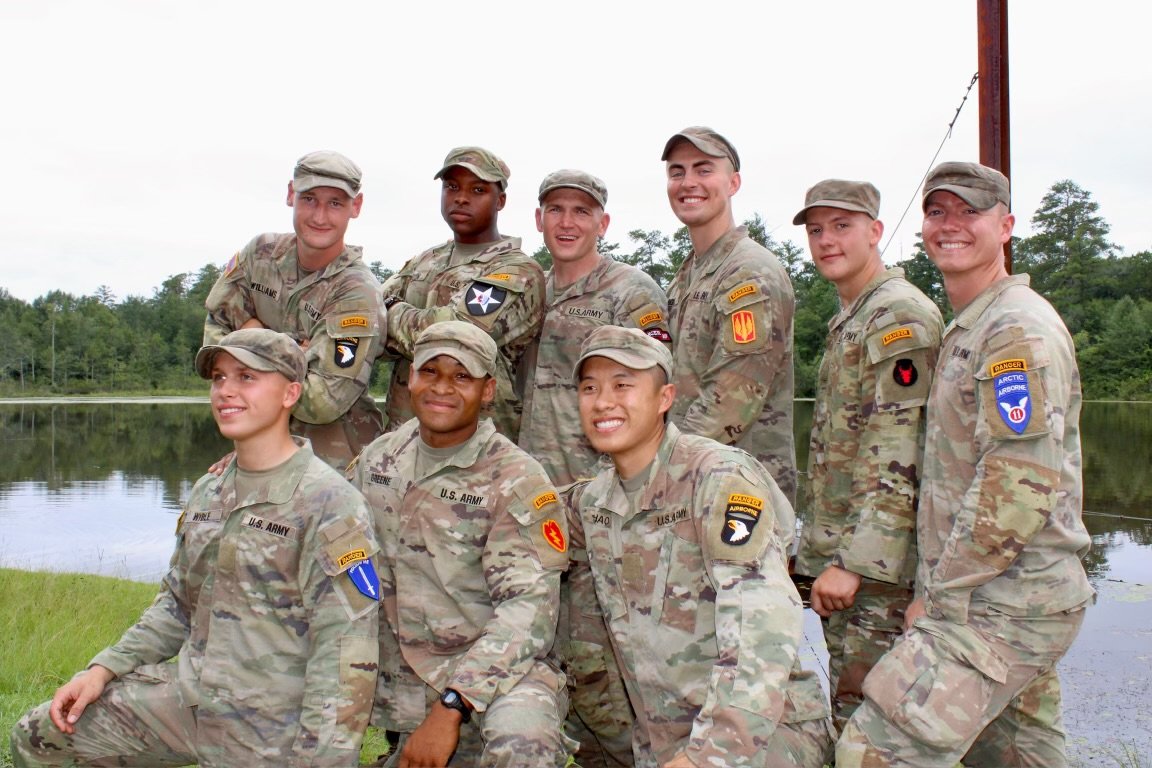
Graduation day with fellow forty-day recycles.
Conclusion
Ranger School is often described through its physical demands, long movements, and cumulative fatigue, but the most defining part of my experience was not found in motion. It was found in stillness. The forty-day recycle forced me into a space where progress could not be measured by forward movement and where effort alone could not change circumstances. What initially felt like delay gradually revealed itself to be an opportunity to confront expectations, reassess identity, and learn how to remain present without control over outcomes. The lessons from that time did not eliminate difficulty or uncertainty when training resumed. Instead, they changed how I interpreted both. Growth does not always come from pushing forward as quickly as possible. Sometimes it emerges from learning to stay where you are, long enough to understand why you are there.
Looking back, I would not trade the recycle for a smoother path. What once felt like delay became preparation of a different kind. The experience did not slow the journey; it reshaped it, extending beyond Ranger School and shaping how I approach leadership, challenge, and uncertainty today. I entered Ranger School expecting forward progress without interruption, but I left understanding that the moments that feel like setbacks are often the ones that change us most.
