Presence
Early in my time at West Point, I began receiving feedback that “presence” was one of my strongest attributes. At the time, I accepted the compliment without fully understanding what it meant. I assumed presence came from obvious things like physical fitness, confidence, projecting my voice, or simply looking the part of a leader. Those explanations felt sufficient until I encountered situations where those qualities alone were not enough. Over time, I began to realize that presence had less to do with what others saw externally and more to do with something internal that I was still learning to understand.
The Surface Level
At first glance, presence seems as simple as being present and being seen. It is easy to assume that leaders who are physically present demonstrate care, while those who are absent do not. Early on, I understood presence primarily through outward signals: bearing, fitness, confidence, and resilience. These attributes shape how others perceive us and influence the impressions we leave behind.
Professional bearing communicates character and consistency. Physical fitness signals discipline and credibility, especially in environments where leaders are expected to share the demands placed on their teams. Confidence and resilience influence how others interpret our responses to pressure and uncertainty.
Yet over time, I began to question whether presence truly came from displaying these qualities or from something deeper. At what point does leadership reflect genuine internal belief rather than performance?
The Shift
As a cadet, I struggled to understand what was truly being asked of me. During my time as a cadet First Sergeant, I wanted to perform my duties to the best of my ability, often reflecting on leaders who had previously served in the role. Without a clear definition of presence, I relied on instinct to guide me.
I struggled to respect leaders whose presence felt performative rather than genuine. My instinct told me to avoid behaviors that felt misaligned with my values while still striving to uphold the standards expected of me. I observed leaders who relied heavily on volume and aggression to accomplish tasks, but I never believed that approach was necessary to lead effectively or generate success.
Choosing not to embody the aggressive figure many expected a First Sergeant to be felt wrong at times, as though I might be falling short of an unspoken standard. Over time, however, I realized that authenticity allowed me to lead more effectively. I cared deeply about the success of my company, and I learned that communicating intent, explaining purpose, and maintaining consistency mattered more than projecting an image that did not align with who I was.
Through that consistency, I began to understand that presence extended beyond outward attributes. It was rooted in alignment between values, actions, and behavior which were concepts others could feel rather than simply observe.
Presence in Real Time
I carried these lessons forward as my understanding of presence continued to evolve. One moment that reshaped my perspective occurred during training at the Joint Multinational Readiness Center when I was pulled away from my platoon to conduct planning alongside the unit staff. While my platoon worked through establishing our aid station, I felt uneasy being absent from the environment where I believed I should be. In my mind, presence meant most importantly being physically there with them.
During a brief conversation, my platoon sergeant pulled me aside and said, “Sir, you are doing more than enough. You have responsibilities that ensure the platoon’s success, and even when you are not here physically, you are still representing us. We appreciate you for that.”
That moment challenged my assumption that presence was tied only to proximity. I began to see it also as the trust, preparation, and confidence others had in the consistency of my leadership.
That theme also correlated with how I thought about physical standards. I expected my platoon to push themselves physically, so I held myself to a standard that allowed me to max the Army Fitness Test. This was never about everyone achieving identical results. It was about showing up alongside my soldiers, supporting their development, and modeling the effort I asked of them. Presence, I learned, was as much about how I trained and worked with them as where I was standing.
The same idea emerged during a squadron level training exercise. Communicating a mission was only part of leadership; practicing it alongside my soldiers mattered just as much. Rehearsing evacuation drills, treatment procedures, and security actions with them reinforced what I had begun to understand earlier: presence is strengthened when actions align with expectations.
I was never perfect, but I came to see that my soldiers valued consistency and commitment more than perfection. While bearing, fitness, and confidence remain visible components of presence, I began to understand presence less as projection and more as alignment. I saw in real time the steady integration of personal values and positive behaviors in service of the team.
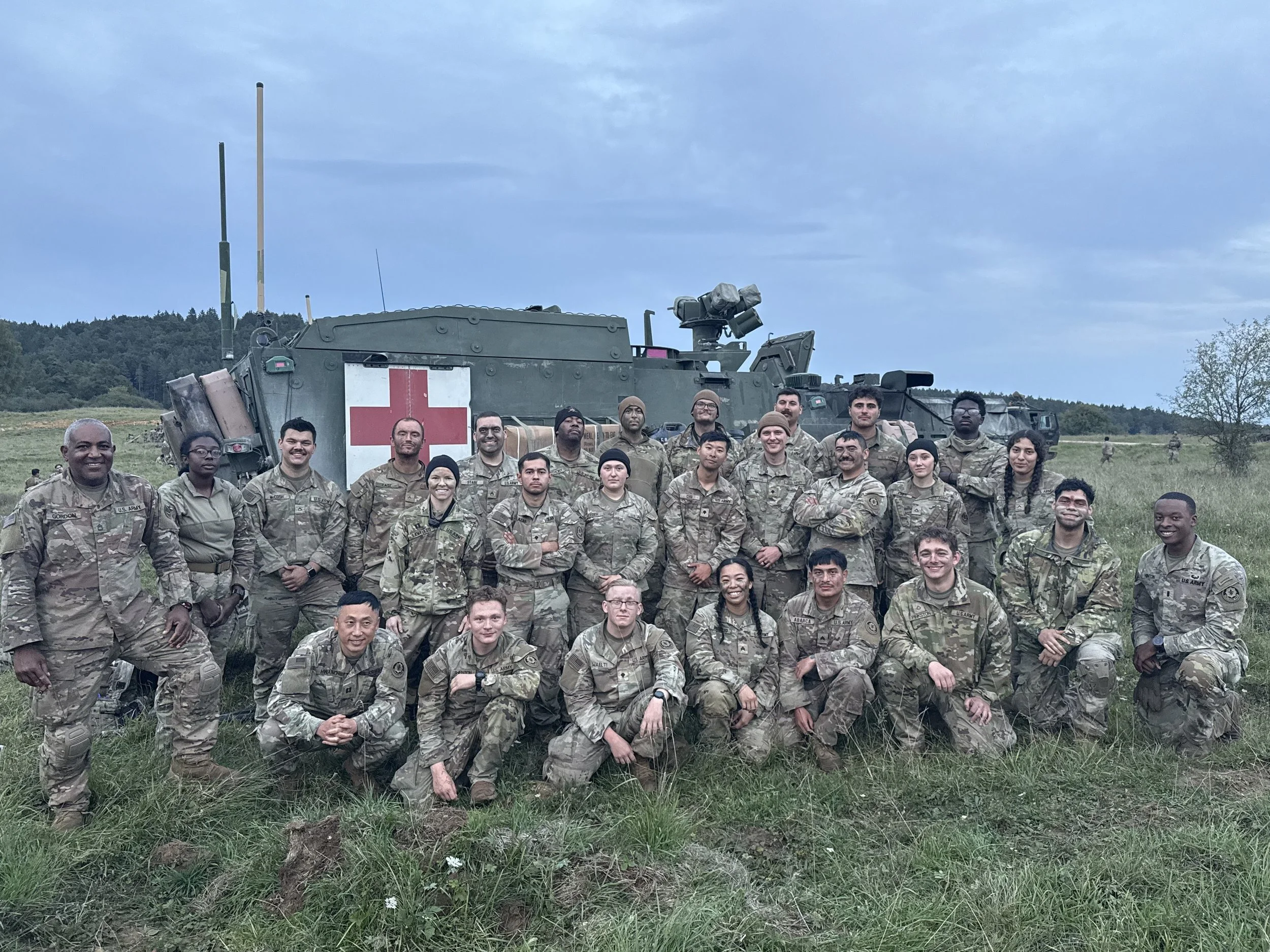
Medical Platoon after completing 2025 Joint Multinational Readiness Training Center (JMRC) rotation
Presence as Alignment
Presence is less about projecting strength and more about becoming someone others trust to remain steady regardless of circumstance. We are constantly observed by those around us, whether we recognize it or not, and that reality creates accountability. Leadership carries a responsibility to embody the standards we expect from others, not as performance but as genuine expression.
I know I will not always get presence right, but I believe I understand it more clearly.
Presence is not something we perform. It is something others feel when our actions consistently reflect who we are.
